High-end aesthetic dental veneers in Madrid
At MAG Dental Madrid, we create high-end aesthetic veneers in Madrid using a 100% digital protocol and the latest technology. We design your veneers by studying not only your smile but also the harmony of your entire face, to achieve teeth with the natural transparency of enamel: veneers that no one notices, but everyone admires.
Free digital smile analysis and mock-up before veneers are placed, so you can see and approve your new smile. Available at our clinics in the Salamanca and Hortaleza districts.
What are dental veneers and what are they used for?
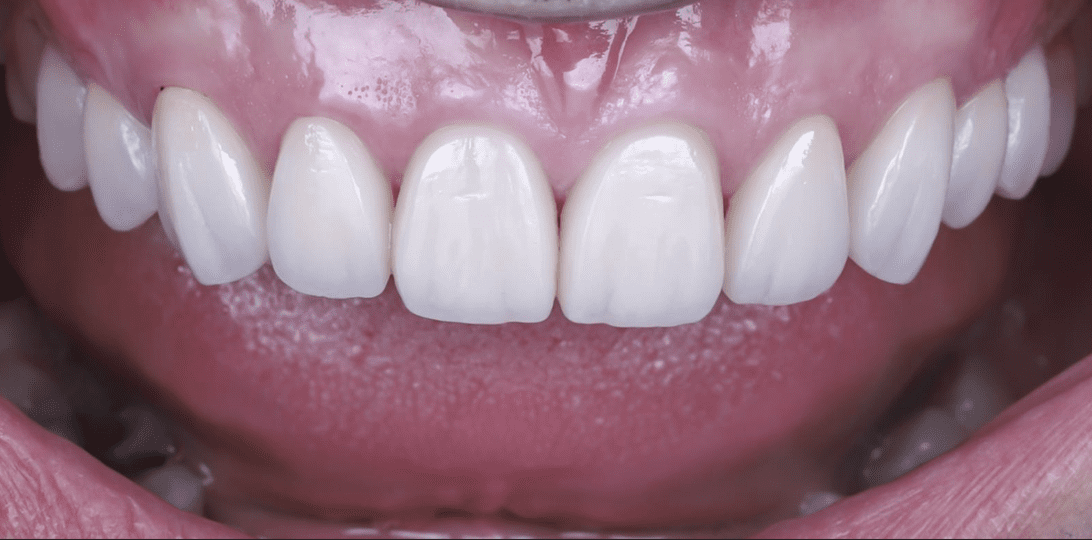
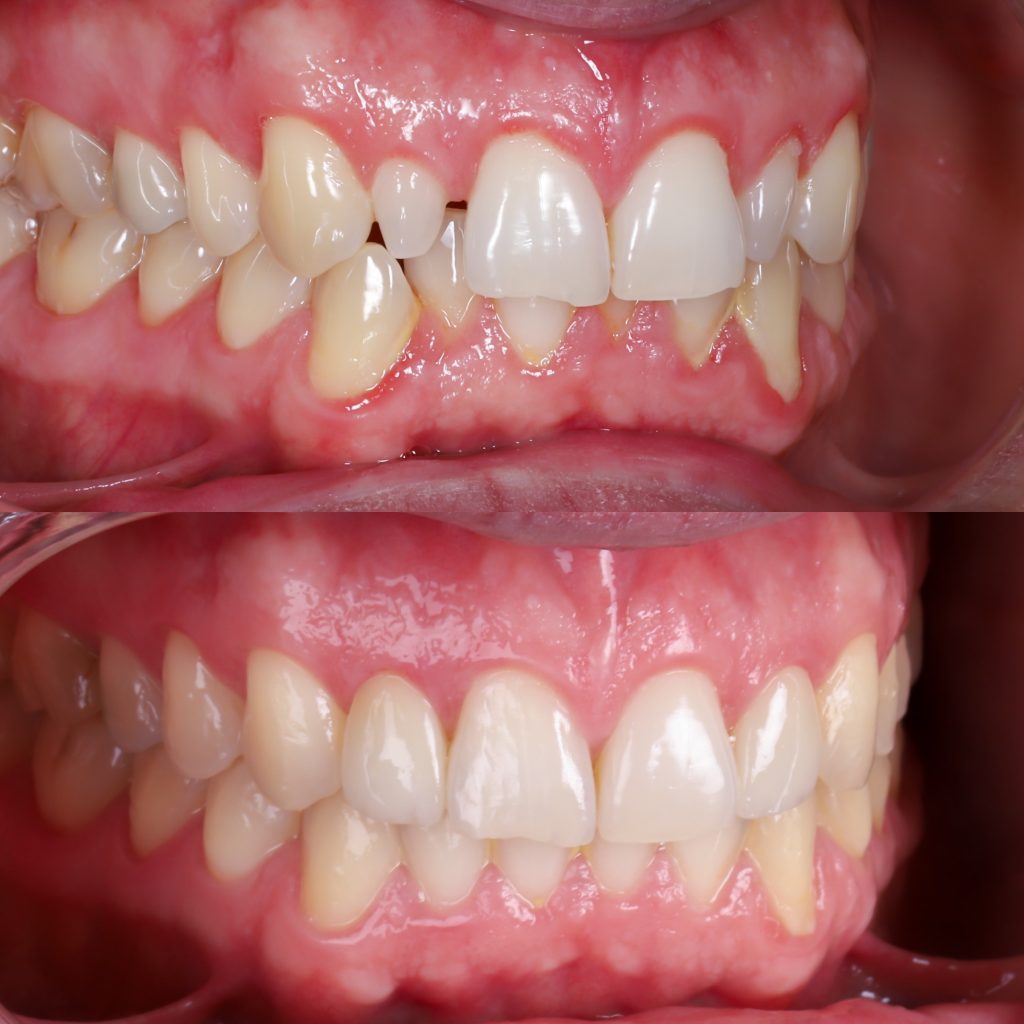
Dental veneers are very thin layers of porcelain or lithium disilicate that are bonded to the visible surface of the teeth to improve their color, shape, size, and proportions. They allow you to transform your smile without orthodontics or lengthy treatments.
- What are veneers used for?
- Stained or yellowed teeth that do not improve with whitening.
- Worn, small, or fractured teeth.
- Gaps between teeth (diastemas).
- Teeth with slight malpositions.
- Asymmetrical smiles or smiles with teeth of different sizes.



Is it advisable to get veneers on your teeth?
Yes, when the goal is aesthetic and the teeth and gums are healthy. They are recommended if you are looking for:
- A whiter and brighter smile on a permanent basis
- Correct shape, size or minor imperfections
- Rejuvenate your smile
- Gain confidence by smiling
They are one of the most conservative ways to transform your smile, especially no-prep micro-veneers, which don't require filing down the tooth. Before placing them, cavities, gum disease, or significant crowding must be treated , and if you clench or grind your teeth ( bruxism ), we will recommend a night guard.
Therefore, before recommending veneers, our registered dentists conduct a complete aesthetic study, assessing:
- Bite
- Gums
- Facial proportions
- Smile line
- Age and expression
Types of dental veneers
There are four main types of dental veneers: porcelain , lithium disilicate , composite , and no-prep . At MAG Dental Madrid, we work with porcelain and lithium disilicate, with or without tooth preparation depending on each case.
1. Porcelain veneers
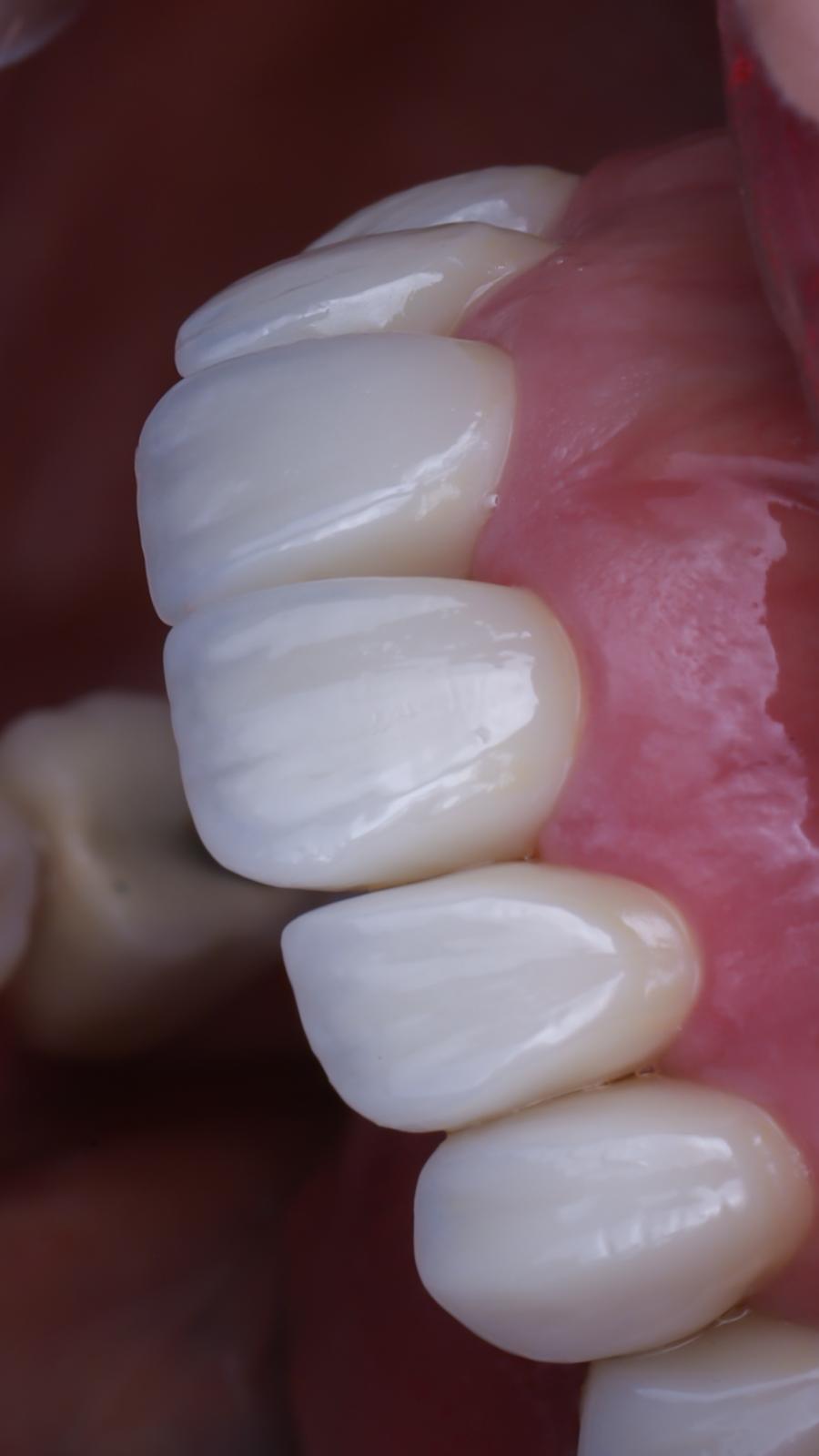
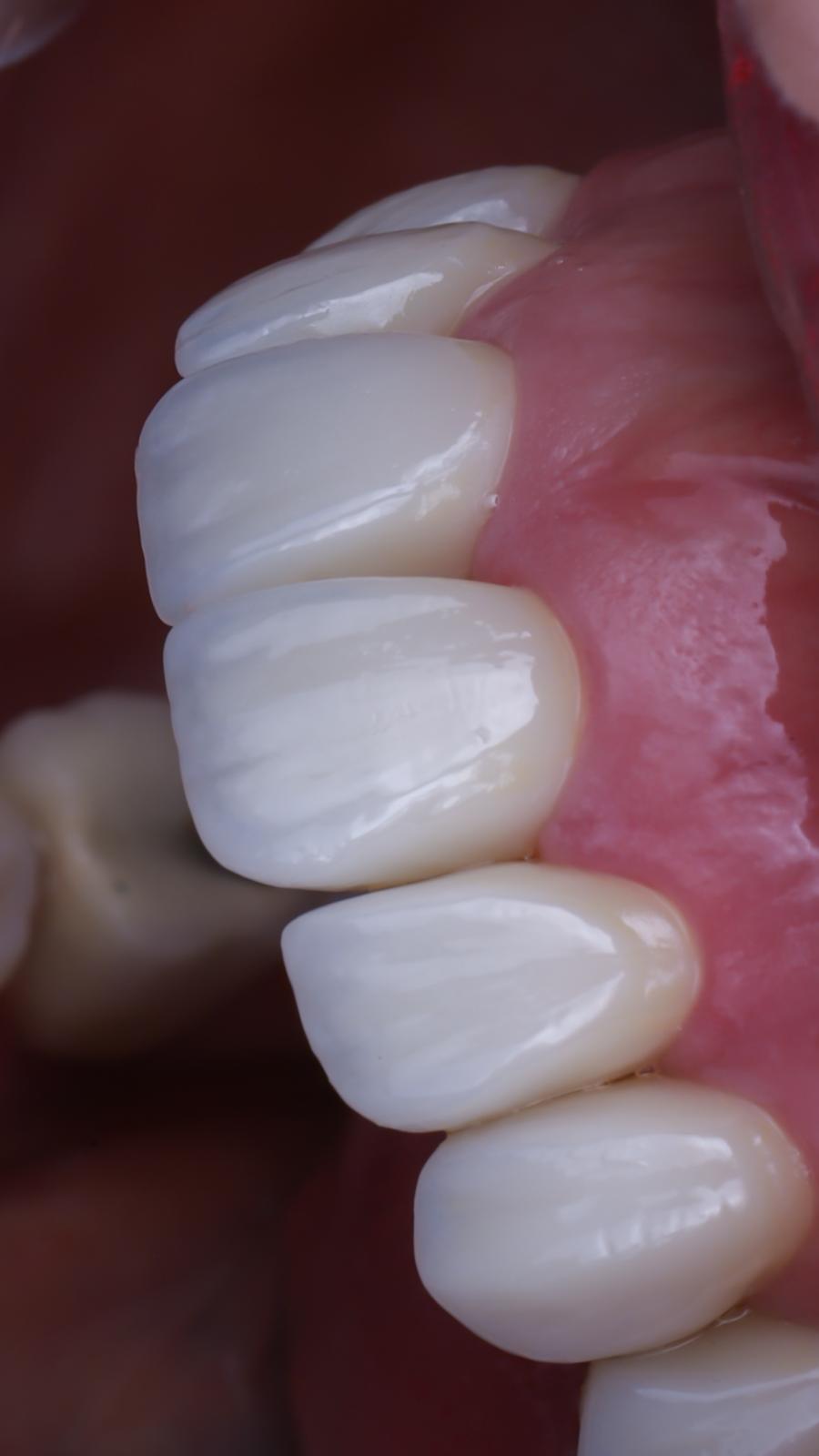
Thin ceramic veneers, custom-made in a laboratory and bonded to the visible surface of the tooth. They reflect light like natural enamel, do not stain, and are the most durable. They are the gold standard material for high-end esthetics. Approximate lifespan: more than 10–15 years.
2. Lithium disilicate veneers
Reinforced glass ceramic, highly resistant and with a translucency very similar to enamel. We recommend it when the case requires greater resistance or a more significant color change, for example, in very dark teeth. Approximate lifespan: more than 10–15 years.
3. Composite veneers
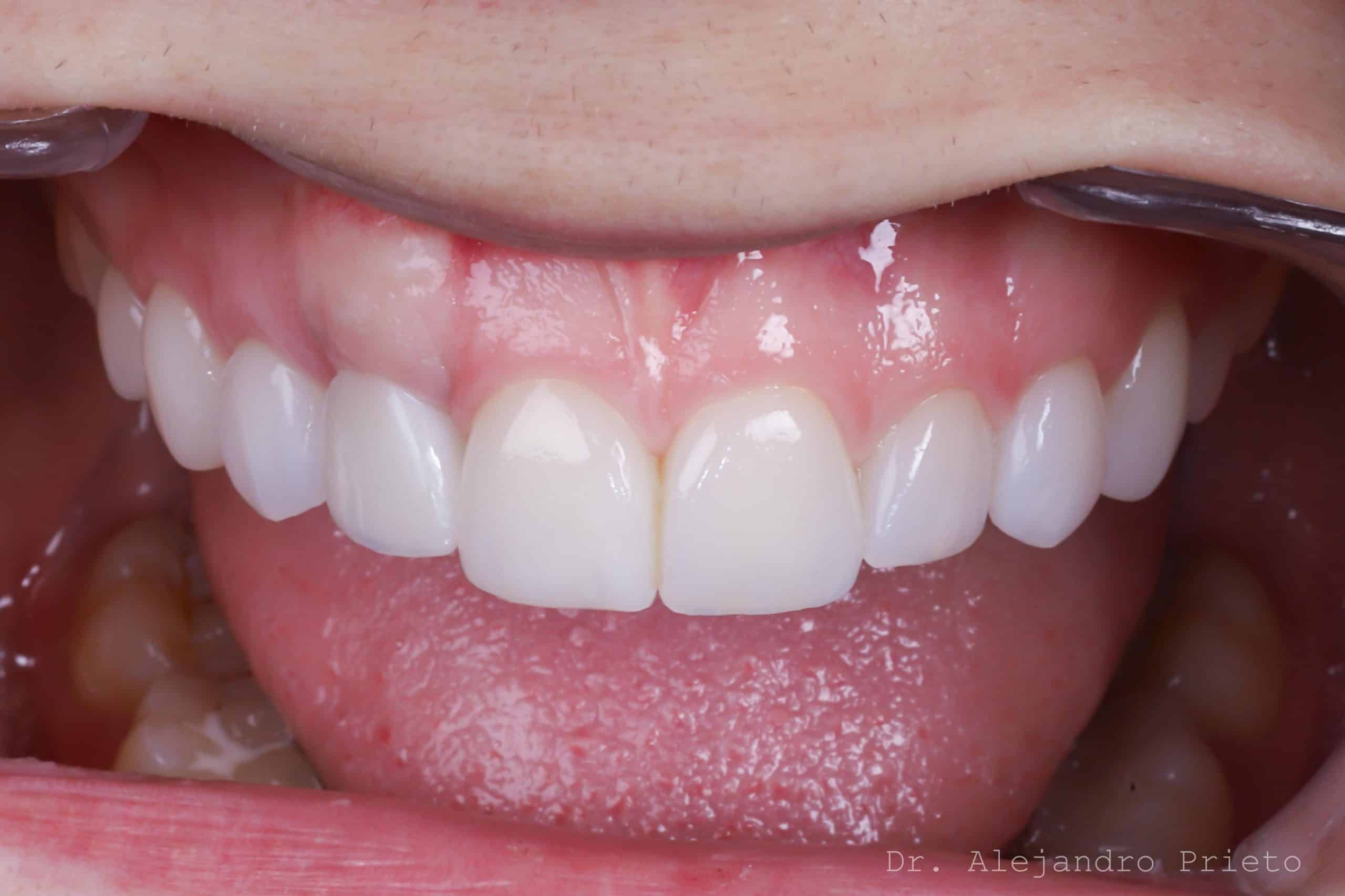
Composite veneers are a resin applied directly to the teeth in the dental office. They are more economical, but the result is less natural: they lose their shine, stain over time (from coffee, tea, tobacco), and require polishing and repairs. Approximate lifespan: about 5 years. Therefore, at MAG Dental Madrid, we generally do not offer this type of veneer. More information at [link to website/website]. composite vs. porcelain veneers.
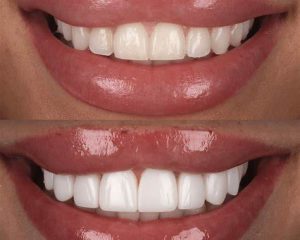
Example of composite veneers: unnatural result. At MAG Dental Madrid, we generally do not work with this type of veneer.
4. No-prep veneers
They can be made of porcelain or lithium disilicate. Whenever the arrangement of your teeth allows it, we make veneers without grinding. They are placed without filing down the tooth, making the treatment minimally invasive and, in many cases, reversible. They typically do not require anesthesia. More information at veneers without grinding.
Indicated for: small or worn teeth, gaps (diastemas), stains that are not removed with whitening and small irregularities in shape.
We will consider another option if there are: teeth that are too far forward or crowded, or a bite that needs to be corrected sooner.
Comparison of the types of dental veneers
| Porcelain | Lithium disilicate | Composite | |
|---|---|---|---|
| Naturalness | Highest | Very high | Media |
| It gets stained over time | No | No | Yes |
| Option without carving | Yes | Yes | Not at all, or very little. |
| Resistance | High | Very high | Media |
| Indicative duration | More than 10–15 years | More than 10–15 years | About 5 years |
| At MAG Dental Madrid | Yes | Yes | In general, no. |
"Well-made veneers should be no more noticeable than a perfect smile: so natural that they are imperceptible to the human eye."
— Dr. Alejandro Prieto, surgeon
Advantages of dental veneers
- They visibly improve the color, shape, and size of the teeth.
- No grinding: the natural tooth is preserved.
- The porcelain does not stain or lose its shine.
- They correct several problems in a single treatment: stains, wear, separations and small malpositions.
- 100% digital protocol: free digital smile study and design based on the harmony of your entire face.
- Mock-up before placement: see and approve your new smile before the final treatment.
- Natural transparency: porcelain imitates the light and translucency of enamel.
What are the disadvantages of dental veneers?
- Initial investment: it is higher than that of other aesthetic treatments, although it is compensated by its duration.
- Fixed color: porcelain does not bleach, that's why we choose the shade with you in the design phase.
- Take care to avoid impacts and bruxism: like any restoration, a veneer can come loose or break; if this happens, it will be re-cemented or replaced. If you clench your teeth, we will protect you with a night guard.
- Not all cases are candidates: with significant crowding or gum problems, that needs to be treated first.
Price of dental veneers in Madrid
High-aesthetic porcelain veneer, with digital smile design and no grinding: €725 per tooth.
Complete arch: from €4.350.
Includes: digital smile study that takes into account the harmony of your smile and your face, mock-up to try your new smile before placing the veneers, fabrication in our exclusive laboratory and cementation.
The number of veneers depends on your smile. During your first visit, which is free of charge, we'll give you a fixed price quote based on your specific case. Learn more about porcelain veneers in Madrid.
How long do veneers last on teeth?
Porcelain veneers are the most durable type of veneer. With good hygiene and regular checkups, they typically last 10 to 15 years, and follow-up clinical studies show survival rates exceeding 90% at 10 years.
To make them last longer:
- Brush and floss or use interdental brushes daily.
- Periodic checks and hygiene.
- Do not bite hard objects (pens, nails, ice) or open containers with your teeth.
- Use a bite splint if you clench or grind your teeth.
Difference between caps and veneers
Veneers cover only the front surface of the tooth and their function is purely aesthetic; they are minimally invasive. Dental crowns cover the entire tooth and are used when it is severely damaged, fractured, or has undergone root canal treatment. We explain the difference between veneers and crowns in detail.
Dental veneer placement process
We work with a 100% digital protocol , from beginning to end, using state-of-the-art technology.
1. Free digital smile analysis
Professional photography, 3D intraoral scanning, facial analysis, and Digital Smile Design (DSD) . We don't just design teeth: we study the harmony of your face (lips, facial proportions, smile line, and expression) so the result is a perfect match for you. You'll see your future smile before we even begin.
2. Mock-up: You test your smile before placing the veneers
We transfer the digital design to your mouth with a temporary simulation. This way you can see how it looks, we adjust it with you, and we don't place the final veneers until we're sure you're happy with it.
3. Laboratory preparation
Our exclusive laboratory manufactures each veneer from the approved design, taking care of the color, shape and natural transparency of the enamel.
4. Cementing the veneers
High-precision adhesive bonding, no tooth preparation required whenever tooth structure allows, with control over color and shape. More details in our comprehensive guide to dental veneers.

Meet the team
MAG Dental Madrid
Multidisciplinary team
Which specialist fits dental veneers?
Veneers are designed and placed by a licensed dentist with training in cosmetic dentistry and prosthetics. At MAG Dental Madrid, each case is planned by our multidisciplinary team in collaboration with our exclusive laboratory.
We are a multidisciplinary team specializing in dental implants and high-end aesthetic prosthetics and veneers. The team is led by Dr. Alejandro Prieto, a surgeon with hundreds of documented success stories in implantology and advanced aesthetics. Having our own dental laboratory allows us to control every phase of treatment to achieve natural, stable, and long-lasting results.
Dental veneers reviews
Our patients especially appreciate the natural-looking results: whiter, more harmonious teeth that don't appear artificial. You can read their reviews on Google and see real cases in our before-and-after dental veneer gallery.
Frequently asked questions about dental veneers
What are dental veneers and what are they used for?
Dental veneers are very thin layers of porcelain or lithium disilicate that are bonded to the visible surface of the teeth. They are used to change the color, shape, size, and proportion of teeth: correcting stains that don't come out with whitening, small or worn teeth, minor fractures, gaps (diastemas), and asymmetrical smiles. At MAG Dental Madrid, we design them digitally so that the result is natural and harmonious with your face.
Is it advisable to get veneers on your teeth?
Yes, when the problem is purely cosmetic and the teeth and gums are healthy. Veneers are one of the most conservative ways to transform a smile, especially no-prep porcelain micro-veneers, which don't require filing down the tooth. Beforehand, cavities, gum disease, or significant crowding must be treated, and patients with bruxism (teeth grinding) are advised to wear a night guard. That's why at MAG Dental Madrid we always conduct a preliminary cosmetic assessment and clearly advise you on whether veneers are the best option for you.
How much do dental veneers cost?
The price depends on the material and the number of veneers you need. In the pricing section of this page, you'll find the price per tooth and the starting price for a full arch. During your first visit, which is free of charge, we'll provide you with a fixed price quote tailored to your specific case.
How long do veneers last on teeth?
Porcelain veneers are the most durable type of veneer: with good hygiene and regular checkups, they typically last 10 to 15 years, and follow-up clinical studies show survival rates exceeding 90% at 10 years. Porcelain does not stain or lose its shine over time. To ensure their longevity, avoid biting hard objects, wear a mouthguard if you clench your teeth, and attend your scheduled appointments.
What are the disadvantages of dental veneers?
There are three main advantages. It's a larger initial investment than other cosmetic treatments, but it's worth it for its longevity. The porcelain color doesn't change with whitening, which is why we choose the shade with you during the design phase. And, like any restoration, a veneer can come loose or break from a hard blow or untreated bruxism; in that case, it can be re-cemented or replaced. With no-prep micro-veneers, the natural enamel of the tooth is preserved.
Do you have to file down your teeth to get veneers?
Not always. Whenever the tooth structure allows, we create no-prep veneers : porcelain micro-veneers that adhere to the enamel without filing it down—a minimally invasive treatment. Only in specific cases, such as teeth that are significantly protruding or have previous restorations, might minimal preparation be necessary, and we always explain this to you beforehand during your appointment.
What is the difference between dental crowns and veneers?
Veneers cover only the front surface of the tooth and serve a purely aesthetic purpose; they are minimally invasive. Crowns cover the entire tooth and are used when it is severely damaged, fractured, or has undergone root canal treatment, because in addition to improving appearance, they restore function. In short: veneers enhance the smile of a healthy tooth, while crowns are used to rebuild a compromised tooth.
Can dental veneers be whitened?
No. Porcelain maintains its color and does not react to whitening. If, in addition to veneers, you want to whiten the rest of your teeth, we perform teeth whitening before fabricating the veneers, so that the final shade of all your teeth matches.
At what age can you get dental veneers?
Once the teeth and gums have finished developing, usually around age 18. There is no maximum age; the important thing is that the teeth and gums are healthy. We assess each case during the first visit.
Can you eat normally with dental veneers?
Yes. Once cemented, you can eat normally. Just avoid biting very hard objects (ice, bones, pens) or opening packages with your teeth, just as you would with your natural teeth.
What happens if a veneer breaks or comes loose?
It's not common, but if it happens, keep the veneer and make an appointment. If it's intact, in many cases it can be re-cemented in a single visit; if it's broken, our lab will make a new one for that tooth.
Do dental veneers damage teeth?
No. No-prep micro-veneers are bonded to the enamel without filing it down, so the natural tooth is preserved. The important thing is to maintain good oral hygiene: the area where the veneer ends is cared for just like a natural tooth, with brushing and flossing.
How many pages do I need?
It depends on your smile line. Generally, the minimum is 6 veneers per arch, from canine to canine; the standard is 8, and for wide smiles, up to 10. We'll discuss this with you during the digital smile study, taking into account the harmony of your face.
Content reviewed by the dental team at MAG Dental Madrid. This information is for guidance only and does not replace a personalized clinical evaluation.
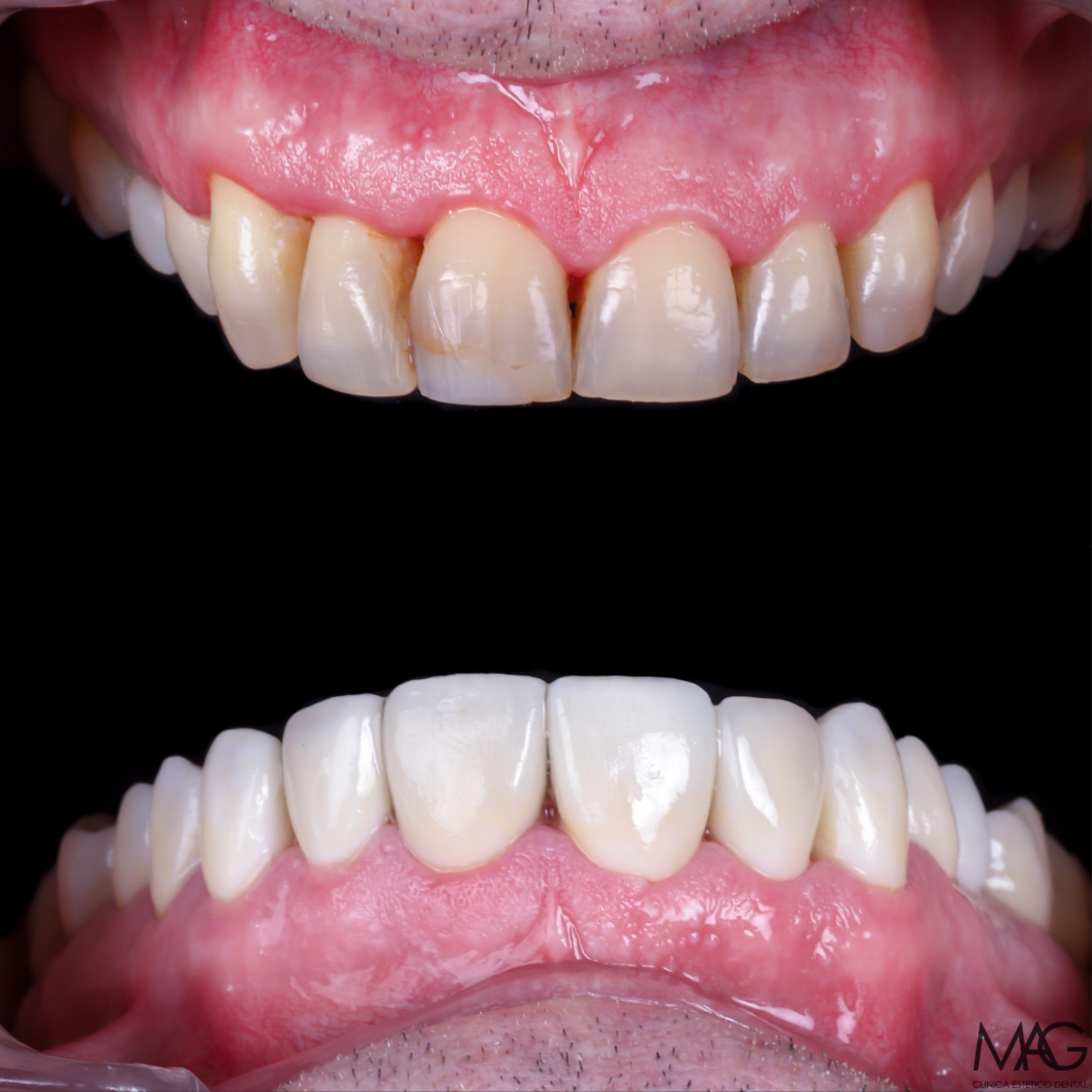
Visualize the transformation
Smile makeovers favor careful and nuanced improvements, to obtain natural results that guarantee overall balance and facial harmony.
Discover the difference
At MAG Dental Madrid, we merge art, technology and maximum precision to design unique, authentic and completely personalized smiles.